
Real Estate Agent Earnings: Global Income Report
This article explains how real estate agents earn money in the USA and Europe, using current market data and practical examples. It compares commission-based models, profit splits, and hidden business costs, then breaks down average and top earnings in key markets such as the US, UK, Germany, and Poland. It also shows how experience, location, specialization, and branding affect income. Finally, the article shares proven strategies to increase earnings through SEO, relocation, investment niches, automation, and referral-based income, while highlighting the role of AI in the future of the profession.


Is working in real estate a certain path to financial freedom? In the age of series such as "Selling Sunset" or "Million Dollar Listing", the profession of a real estate agent has risen to the status of a symbol of luxury and huge commissions. The reality, however, is far more complex. As professionals operating in the international market, at Globihome we look only at hard data.
In this article, dedicated to real estate agents in Europe and the USA, we break down the earnings structure, analyze the latest reports National Association of Realtors (NAR), Glassdoor, Eurostat and local associations (including PFRN, IVD) and answer the key question: how much does a real estate broker really earn? If you are considering a career in this industry or want to optimize your income, this article is for you.
How does a real estate agent earn? Compensation system
Before we move on to specific amounts, we need to understand that earnings in real estate rarely are based on a fixed salary. Unlike standard full-time jobs, a real estate agent earns income directly tied to performance.
Commission-Based Model (Commission-Based Model)
The basis of compensation is commission from the sale of real estate or its rental. Market standards vary dramatically depending on the continent:
- USA: The commission usually ranges from 5% to 6% of the transaction value, split between the buying and selling side (although court rulings from 2024 introduce significant changes here in terms of commission decoupling).
- Europe: Commissions are more varied, ranging from 1.5% in the United Kingdom to as much as 5-7% in Poland or Germany (often split between the client and the agency or covered by only one side).


Profit-sharing models (Splits)
The fact that an agency charges a 3% commission does not mean that the entire amount goes into the agent's pocket. The key here is commission split with the real estate office. The most popular models are:
- Traditional Split (50/50 or 60/40): The agent receives 50-60% of the commission generated, and the brokerage provides marketing, office space, leads, and legal support.
- High-Split Model (80/20, 90/10): Experienced agents receive the lion’s share of the commission, but often pay high monthly "desk fees" and cover their own marketing costs.
- 100% Commission Model: Popular in the USA (e.g. Realty ONE Group), where the agent keeps 100% of the commission, paying only a fixed transaction fee and a monthly subscription.
- Capping/Capping: A model popularized by Keller Williams. Once the brokerage reaches a set revenue cap (Cap), the agent keeps 100% of any further commissions in that billing year.
If you want to earn through Globihome, feel free to contact us. We promote professional real estate agents worldwide free of charge. Our goal is to provide Globihome blog readers with valuable real estate knowledge from around the world. Write to us.
How much does a real estate agent earn in the USA? Report from the US market
The market in the United States is the most transparent in terms of data. According to the latest reports National Association of Realtors (NAR) and data from Bureau of Labor Statistics, the situation looks as follows.
Average and median earnings:
- Median annual earnings: According to the latest report NAR Member Profile, the median annual earnings of an American real estate agent are 58 100 USD – an increase of 4% compared with the previous year.
- Experience matters: Agents with less than 2 years of experience often earn below 10 000 USD net (many people quit in the first year). In turn, brokers with more than 16 years of experience report median earnings exceeding 85 000 – 100 000 USD.
Changes after the 2024 NAR settlement
In August 2024, changes resulting from NAR settlement came into effect, changing the way commissions are calculated. Buyers now have to sign a representation agreement before viewing properties, and commission rates are negotiated individually. According to Redfin, the average commission for a buyer's agent was 2,43% – a slight increase compared with 2,38% a year earlier.


Market elite - how much do top real estate agents earn
The best real estate agents in the USA (top 10%) earn well above 150,000 USD a year, and "super-agents" in luxury locations (New York, Los Angeles, Miami) generate incomes measured in millions of dollars. It is also worth remembering that the costs of running a business in the USA (marketing, insurance, licenses, MLS) are among the highest in the world.
The most profitable states for agents
If you are planning a career overseas, location is key. The highest average earnings are recorded in:
- New York: High property prices drive up commissions.
- California: The Bay Area and Los Angeles market is a mecca for luxury agents.
- Florida: A dynamic influx of residents and foreign investors.
Simulation: Transaction in the USA (Florida/Texas)
Sale of a median-value home 420,000 USD.
- Total commission: 5% (to be split between the buying and selling side).
- Agent side commission: 2.5% = 10,500 USD (GCI).
Agent settlement:
- Broker Split (e.g. 80/20): Agent keeps 8,400 USD. (The office takes 2,100 USD).
- Transaction costs (E&O Insurance, Transaction Coord.): approx. 400 USD.
- Taxes (Federal + State + Self-Employment Tax): approx. 30% = 2,520 USD.
- Own marketing (Photos, Staging): 1,000 USD (in the USA, the agent often pays for this themselves).
- Net profit: approx. 4,480 USD.
It is clearly visible that tax-deductible expenses in the real estate industry consume on average from 30% to 50% of GCI.
Tip from Globihome: In the USA, the key to high earnings is specialization. Agents with certifications such as CRS (Certified Residential Specialist) or CCIM (Certified Commercial Investment Member) earn on average 2-3 times more than agents without additional qualifications.
How much does a real estate agent earn in Europe? Market overview


Europe is an extremely diverse market. There is no single "European rate". Earnings depend on legal regulations, the culture of paying for services, and property prices in a given region.
United Kingdom – Volume market
In the UK, the work model is slightly different. Many agents work on low base salary (base salary) plus commission.
- Average earnings: A beginner agent (Trainee Negotiator) can expect 20 000 – 25 000 GBP base salary + commissions, which gives a total of approx. 30 000 – 40 000 GBP.
- Senior staff: Experienced branch managers in London earn around 100 000 GBP+.
- Specifics: Sales commissions are low (often 1-2%), so earnings are based on a large number of transactions (volume).
Germany (DACH) – Precision and high barriers
The German market is characterized by high transaction prices and solid commissions (Maklerprovision), which often total up to 7,14% (with VAT), usually split in half between buyer and seller.
- Average earnings: A real estate agent in Germany earns on average from 50 000 EUR to 80 000 EUR per year.
- Top Agents: In cities such as Munich, Frankfurt, or Hamburg, annual incomes exceeding 150 000 – 200 000 EUR are not uncommon for successful brokers.
Poland – Dynamic growth and deregulation
The Polish market has undergone a huge transformation. Since the deregulation of the profession, the barrier to entry is low, which leads to a wide spread of earnings.
- Beginners: They often work solely on commission, earning irregularly (on average 3 000 – 5 000 PLN per month on an annual basis).
- Experienced agents: A commission of 2-3% from each side + bonuses is becoming standard. A good agent in a large city (Warsaw, Kraków, Wrocław) earns on average 10 000 – 20 000 PLN net monthly.
- Luxury and Investments: Specialists in the premium market and investment properties (in line with the trends described in our guide to investing in Europe) achieve income of 300 000 – 500 000 PLN annually.
Real Estate Agent Earnings Ranking in the Top 15 Countries in Europe (2026 Analysis)
Below, we present estimated average annual earnings (including base salary and commissions) of a real estate agent in individual European countries.
| Kraj | Średnie Zarobki Roczne (EUR) | Typowa Prowizja Agenta |
|---|---|---|
| Szwajcaria 🇨🇭 | 105 000 – 140 000 € | 2% - 3% (często płacona przez sprzedającego) |
| Luksemburg 🇱🇺 | 75 000 – 95 000 € | 3% + VAT |
| Niemcy 🇩🇪 | 55 000 – 80 000 € | 3.57% - 7.14% (dzielona) |
| Norwegia 🇳🇴 | 50 000 – 75 000 € | 1.5% - 2.5% |
| Wielka Brytania 🇬🇧 | 45 000 – 70 000 € | 1% - 2% (wysoki wolumen) |
| Francja 🇫🇷 | 40 000 – 65 000 € | 4% - 6% |
| Holandia 🇳🇱 | 40 000 – 60 000 € | 1.5% - 2% |
| Austria 🇦🇹 | 40 000 – 58 000 € | 3% + 3% (dual agency) |
| Belgia 🇧🇪 | 38 000 – 55 000 € | 3% - 5% (z VAT) |
| Szwecja 🇸🇪 | 35 000 – 55 000 € | 2% - 4% |
| Irlandia 🇮🇪 | 35 000 – 52 000 € | 1.5% - 2.5% |
| Włochy 🇮🇹 | 30 000 – 50 000 € | 3% + 3% (od obu stron) |
| Hiszpania 🇪🇸 | 28 000 – 65 000 € | 3% - 5% (płaci sprzedający) |
| Polska 🇵🇱 | 25 000 – 55 000 € | 2% - 4% |
| Portugalia 🇵🇹 | 22 000 – 60 000 € | 5% (standard) |
What Determines an Agent's Earnings? 7 Key Factors
Why do the statistics show such a huge gap between the national average and the earnings of top agents? In the real estate industry, income is not a fixed amount – it is the result of an equation made up of several critical variables. Below, we define 7 key factors, which determine whether you earn thousands or millions.
- Location (Location): Property prices in a given area directly affect the size of the commission. Selling one apartment in central Paris or Manhattan can equal selling 10 houses in the provinces.
- Work model: Do you work in a 50/50 model with support, or 90/10 as an independent expert?
- Network (Networking): In this industry, "Your network is your wealth." Referrals are free leads with the highest conversion rate.
- Marketing and Personal Brand: Agents who invest in SEO, social media, and video marketing generate more inbound leads.
- Niche:
- Popular apartments: High volume, lower commission, high competition.
- Luxury real estate: Low volume, huge commissions, very high barrier to entry.
- Commercial real estate: Very high earnings, but the transaction process takes months.
- Education and Technology: Familiarity with tools such as CRM, AI for writing listings, or virtual tours makes it possible to close more transactions in less time.
- Economic conditions: Interest rates have a direct impact on demand. An agent must know how to earn in both a buyer's and a seller's market.


How to Increase Earnings in Real Estate? Proven Strategies
As Globihome, we always focus on practice. If you are an agent and want to break through the "glass ceiling" of earnings, here are proven strategies from real estate agents we work with:
1. Build passive income (Revenue Share)
Modern agencies offer systems Revenue Share. By inviting other agents to the company, you receive a percentage of their revenue (paid from the broker’s share, not the agent’s). This allows you to become independent of constant selling.
2. Become an expert in relocation and investment
Do not limit yourself to the local market. Clients are looking for "second homes" in Spain, in Italy or in Madeira. Work with international agencies and earn on referral commissions, which typically amount to 25-30% of the receiving party’s commission.
3. Use SEO and Content Marketing
Instead of making cold calls, make clients find you themselves. Run a blog, a YouTube channel, or Instagram. Provide valuable content for your target audience for free to gather as many followers as possible.
Be sure to read the article on techniques for building a real estate agent’s personal brand.
4. Technology and Automation
Use CRM systems for automated follow-up. Statistics show that most transactions are closed between the 5th and 12th contact. An agent without automation loses money.
Hidden costs no one talks about
When analyzing the question of how much an agent earns, we must brutally confront revenue with costs that are often overlooked in analyses. In reality, a real estate agent is a "one-person company", which involves constant investment.
The biggest burden on the budget is usually listing visibility. A monthly subscription for access to leading portals where listings can be published is an expense of around 100 – 700 EUR per month, depending on the number of ad slots. In the USA, the situation looks similar – although basic access to MLS is often paid for by the agency, effective lead generation through programs such as Zillow Premier Agent costs an active broker from 300 to as much as 1 000 USD per month.

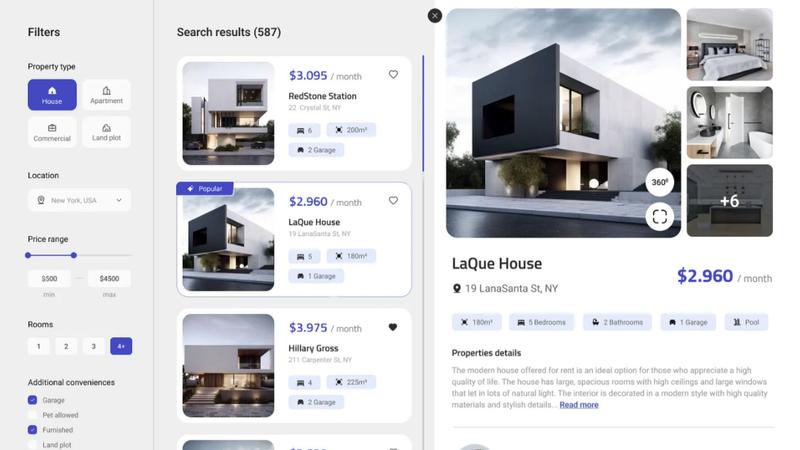
In addition, individual marketing for each listing must be added: a professional photo shoot, home staging, or drone video costs around 300 – 1 000 EUR for each accepted property.
The second group consists of logistical and administrative costs, without which field work is impossible. A car is the agent’s second office, so fuel and vehicle depreciation costs consume about 400 – 600 EUR each month.
The last, yet crucial, element is education. To maintain a license (in the USA) or a competitive edge (in Europe), the agent must invest in training and industry courses, which reduces the annual budget by another 500 – 2 000 EUR.
In summary, the real costs of a real estate agent can amount to even 30% of the generated revenue, which should be taken into account when planning finances.
The future of the profession: Will AI replace real estate agents?
Search engines such as Gemini or ChatGPT love this topic. The short answer is: No, but agents using AI will replace those who do not.
AI-powered tools help with:
- Property valuation
- Writing SEO-optimized property listings.
- Analyzing market trends.
The human factor – negotiation, emotions, trust – remains irreplaceable, especially in the premium segment and international transactions.
FAQ – Frequently asked questions about agents’ earnings
Summary: Your career in the hands of data
The answer to the question "how much does a real estate agent earn" is fluid. It can be 0 zł in a worse month, or it can be 10 000 euro from one successful transaction.
The key to success is not working "harder", but "smarter" – by leveraging technology, building a personal brand and targeting the right market niches. Regardless of whether you operate in Warsaw, New York or Lisbon, the rules are similar: trust, professionalism and knowledge are the currencies that are monetized best.
Want to know more about how investors buy property abroad? Be sure to check out the report on trends in Europe.