
Buy Property in Dubai: No Taxes, High ROI & Golden Visa
This guide explains why Dubai real estate remains attractive for investors in 2026, covering tax advantages, average apartment prices, rental yields, and the Golden Visa route through property purchase. It outlines market trends, the most popular districts, and expected ROI across different property types. The article also walks readers through each step of buying property in Dubai, from budgeting and choosing an agent to due diligence, DLD registration, and receiving the Title Deed. It ends with practical advice on selecting the right location and developer, making it useful for both investors and buyers planning a home or rental investment.

Is it worth buying an apartment in Dubai in 2026? How much does property cost in the UAE? How can you obtain a Golden Visa by purchasing an apartment? What is the return on investment? These are the questions asked by every potential investor interested in the real estate market in the United Arab Emirates.
The real estate market in Dubai is experiencing a record boom, attracting investors from around the world interested in buying property in Dubai, both in the segment of apartments for sale, and villas in Dubai. According to the latest data from the Dubai Land Department (DLD), in the first six months of 2026 approximately 94,000 real estate transactions with a total value of AED 262.7 billion (approximately USD 71.5 billion) were recorded, representing a 40% year-on-year increase. In our view, Dubai remains one of the most dynamic real estate markets in the world, offering a unique combination of high returns (ROI), tax-free, as well as the possibility of obtaining a long-term Golden Visa residence visa.
In 2024 apartment prices in Dubai increased by 20% year on year, reaching an average value of AED 1,597 per square foot according to Deloitte's report. In turn, according to Knight Frank, average residential property prices in Dubai reached a record level of AED 1,685 (USD 459) per square foot in the fourth quarter of 2024, exceeding the previous peak from 2014 by 13.3%. The Dubai Land Department recorded over 169,000 property sale transactions, with a total value of AED 488 billion, of which 67% were secondary market properties in Dubai, and 33% off-plan properties, often chosen by investors due to flexible payment plans and high potential for value growth.
At Globihome, while tracking global investment trends, we observe that apartments in Dubai and luxury apartments in Dubai are attracting more and more clients who appreciate not only no income tax on rental income, no capital gains tax, but also political stability, developed infrastructure, and ease of buying property by foreigners in Dubai.
All data is based on official sources: Dubai Land Department (DLD), RERA, Property Finder, Bayut, Knight Frank, CBRE, Cavendish Maxwell, Fitch Ratings, as well as Globihome’s own analyses. At the end of the article, we provide contact details for a professional real estate agent in Dubai recommended by us real estate agent in Dubai, who will support you at every stage if you want to buy property in Dubai.
Why Is It Worth Buying Property in Dubai in 2026?

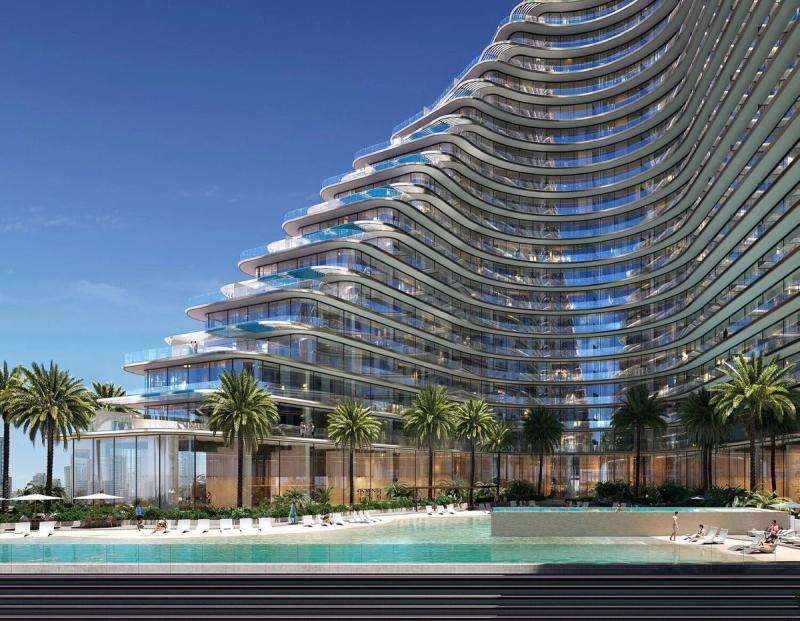
Is investing in property in Dubai profitable? Is it worth buying an apartment in Dubai as an investment? These are fundamental questions that we hear from Globihome readers every day. The answer is: YES! Why? First and foremost because investment in property in Dubai stands out on the global market thanks to its exceptionally favorable tax climate. The United Arab Emirates do not impose personal income tax, property tax, or capital gains tax, which means that all rental income and profit from the sale remains in the investor’s pocket. At the same time, you must remember the registration fee, which we will describe later in the article.
No Taxes – The Biggest Advantage of Investing in the UAE
Dubai offers one of the most attractive tax systems for property investors in the world:
- 0% property tax – you do not pay annual property tax
- 0% income tax – no personal income tax on rental income
- 0% capital gains tax – selling property does not create tax liabilities
- 0% inheritance tax – inheriting property is tax-free
The only significant fee is the one-time DLD registration fee of 4% of the property value at purchase.
High Returns on Investment – what is ROI in Dubai?
According to 2025 data, the average return on investment in Dubai is 6-8% per year, which significantly exceeds other global markets:
- London: 2-4% annually
- New York: 2-4% annually
- Hong Kong: 2-3% annually
- Warsaw: 4-5% annually
Some districts in Dubai offer even higher returns:
- Jumeirah Village Circle (JVC): 7% for a studio, 6- 7% for larger apartments
- Al Furjan: 7% for studios, 6-7% for apartments
- Arjan: up to 5-8 % for smaller units

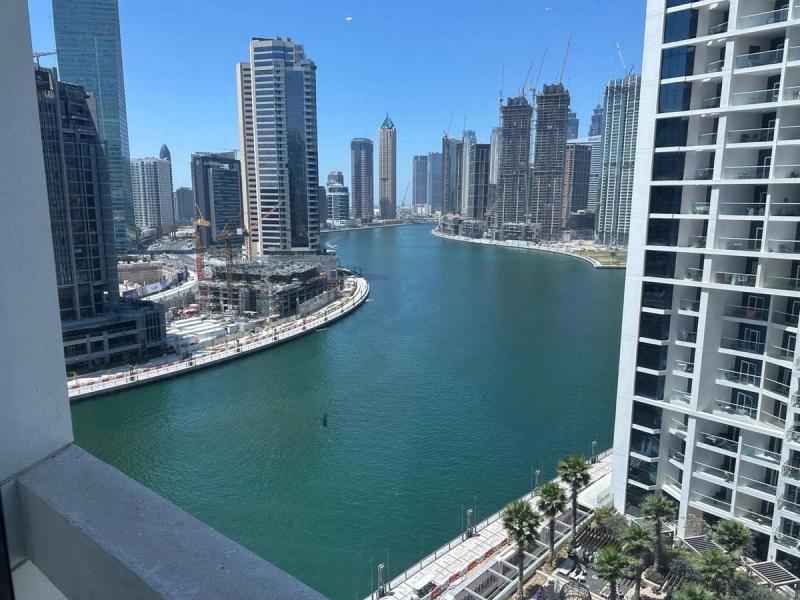
Golden Visa – How to Obtain a Resident Visa in Dubai?
By purchasing a property worth at least 2 million AED (approximately 545,000 USD) , you gain the right to apply for 10-year Golden Visa , which gives:
- A long-term resident visa without the need for a sponsor
- The ability to sponsor family members (spouse, children, parents)
- The right to work and run a business in the UAE
- The ability to stay outside the UAE for more than 6 months without losing the visa
- The ability to renew the visa after 10 years
As of 2025, there are also lower investment thresholds:
- 750,000 AED – 2-year visa
- 2 million AED – 10-year Golden Visa
- Off-plan properties also qualify for the visa
Population Growth and Rental Demand in Dubai
Dubai’s population is growing at a rate of about 5% annually, reaching currently over 3.8 million residents, and according to the Dubai Urban Master Plan 2040 it is expected to increase to 7.8 million by 2040. This steady demographic growth is driven mainly by expatriates, who account for about 90% of the emirate’s population. Highly qualified professionals, entrepreneurs, and high-income individuals choose Dubai for its tax-free environment, high quality of life, safety, and access to world-class infrastructure. The steady influx of new residents translates into consistently high demand for housing, which stabilizes the rental market and minimizes vacancy risk. Additionally, Dubai welcomed 18.7 million international tourists in 2024, which drives demand for short-term rentals.

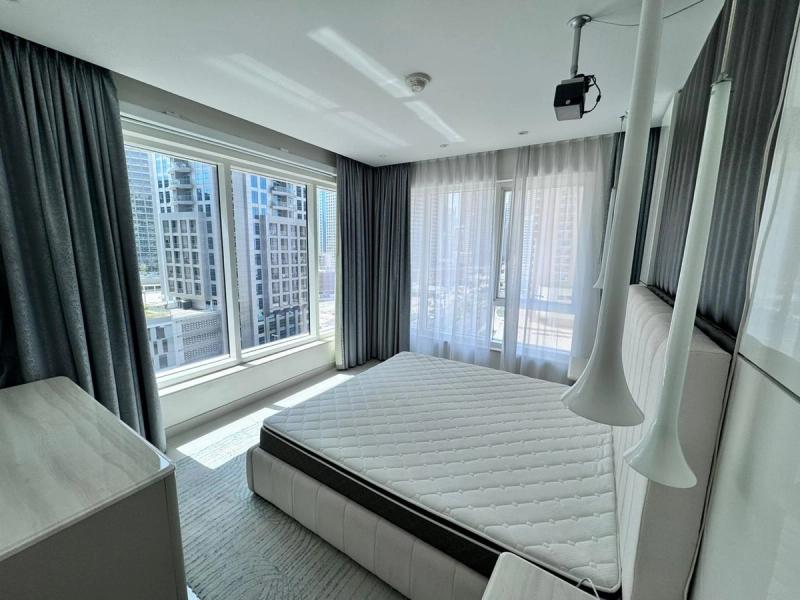
Apartment Prices in Dubai: Detailed Market Analysis 2026
According to Deloitte's "Dubai Real Estate Predictions 2025", residential property prices in 2024 increased by 20%, and rents by 19%. Particularly strong growth was recorded in the villa segment – 27.9% annually, while apartments gained around 18% in value.
Luxury properties The ultra-luxury segment is experiencing a true boom. In 2024, 948 luxury property transactions were recorded (above 15 million AED), and sales of properties worth over 10 million AED reached 7.6 billion AED. Dubai outpaced cities such as London and New York in this segment.
How much does an apartment in Dubai cost in 2026?
The average price per square foot in 2026 is 1,755 AED (approximately 477 USD).
Average 2026 prices by property type are as follows:
- Apartments: 1.3 million AED (approximately 354,000 USD)
- Villas: 6.6 million AED (approximately 1.8 million USD)
- Commercial properties: 2.1 million AED (approximately 572,000 USD)
- Plots: 6.7 million AED (approximately 1.82 million USD)
A standard 75-square-meter apartment (about 807 square feet) costs on average 1.36 million AED (about 370,000 USD). The average price of an apartment in the primary market is currently 1.3 million AED (354,000 USD), while villas reach an average of 3.54 million AED (964,000 USD). It is worth noting that prices vary significantly depending on the location, property type, and finish standard.
If you want to receive up-to-date property listings tailored to your expectations, contact the real estate agent we recommend at the end of the article. On our Globihome blog, we recommend only professional and trusted real estate agents. We do this free of charge. We care about professional service for our readers.
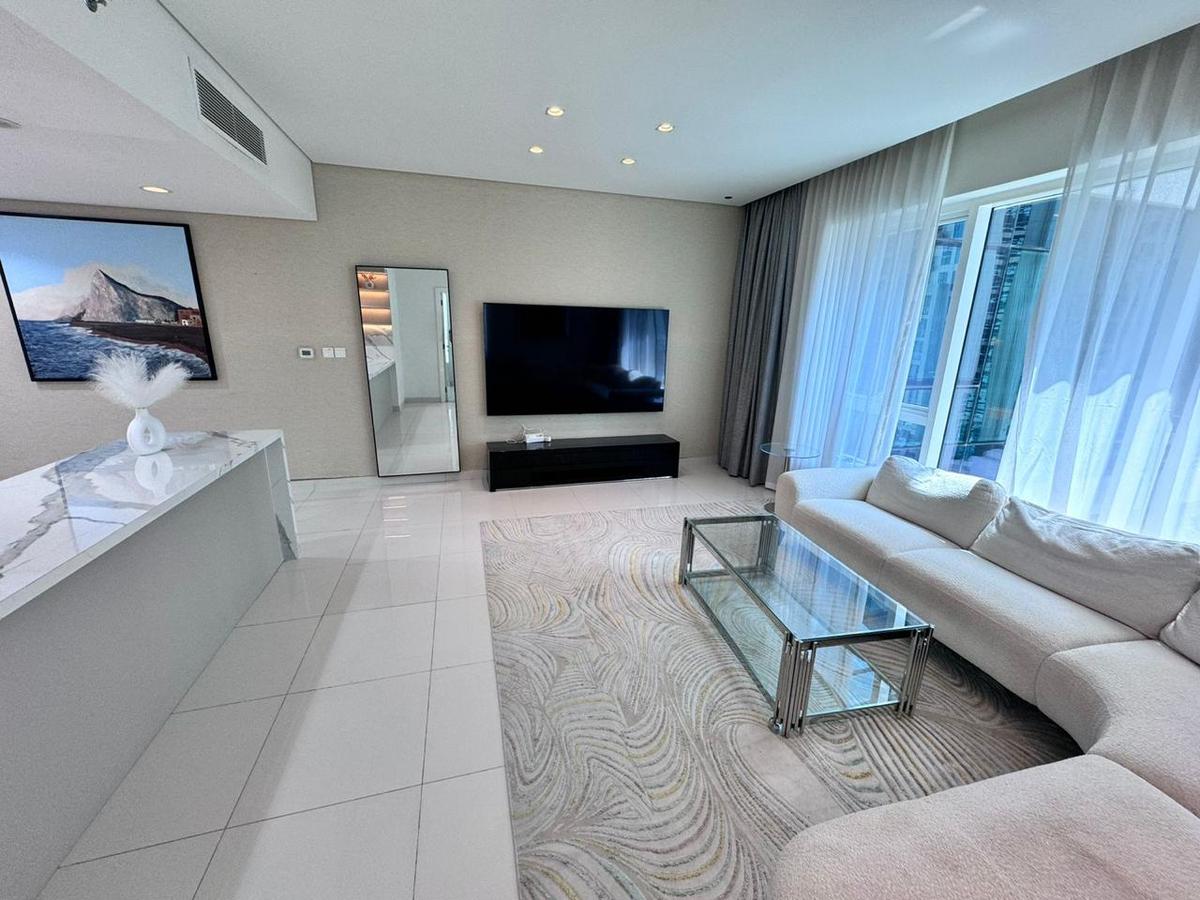
Property Prices in Dubai’s Districts
Property prices in Palm Jumeirah
- Studio: from 1.2 million AED (327,000 USD)
- 1-bedroom: from 2.5 million AED (680,000 USD)
- 2-bedroom: from 4 million AED (1.09 million USD)
- Villas: 10-110 million AED (2.72 - 30 million USD)
- Rental yield: 5-9% (studio highest return)
Property prices in Business Bay
- Studio: 800,000 - 1.2 million AED (218,000-327,000 USD)
- 1-bedroom: 1.5 - 2.5 million AED (408,000-680,000 USD)
- 2-bedroom: 2.5 - 4 million AED (680,000-1.09 million USD)
- 3-bedroom: 4 - 8 million AED (1.09-2.18 million USD)
- Rental yield: 5- 7.5% (studio highest)
Dubai Marina
- Studio: 700,000 - 1.1 million AED (191,000-300,000 USD)
- 1-bedroom: 1.3 - 2.2 million AED (354,000-600,000 USD)
- 2-bedroom: 2.2 - 3.8 million AED (600,000-1.03 million USD)
- Rental yield: 6-7% (studio highest)
Damac Hills
- Studio: from 450,000 AED (122,500 USD)
- 1-bedroom: from 700,000 AED (190,500 USD)
- 2-bedroom: from 1.1 million AED (300,000 USD)
- 3-bedroom: from 1.5 million AED (408,000 USD)
- Rental yield: 6.-7%
How to buy an apartment in Dubai: Step by step
Buying an apartment in Dubai is much simpler than in many Western countries, and the entire process can take just a few days for already completed properties.
Step 1: Define your goal for buying an apartment in Dubai
Before you start your search, you need to determine whether you are buying the property as:
- An investment for long-term rental – stable monthly income
- An investment for short-term rental – higher profitability, but greater time commitment
- A home of your own – for you and your family
- A speculative investment – buying to resell for profit (flipping)
Step 2: Set your budget and source of financing
Cash purchase from our observations in Globihome, most transactions in Dubai are cash transactions, which demonstrates the wealth of buyers. Paying in cash eliminates the need to apply for a mortgage and speeds up the process.
Mortgage in Dubai Foreigners can obtain a mortgage in Dubai; however, the conditions are more restrictive than for residents:
- Down payment for non-residents: from 40% of the property value for properties below 5 million AED
- Down payment for residents: 20%
- Maximum loan term: 25 years
- Income requirements: Banks usually require a minimum monthly income of 15,000-20,000 AED
In the first quarter of 2026, 9,300 residential mortgage transactions were recorded, representing a 24% year-on-year increase. The total value of these transactions reached 20.4 billion AED (+46.8% year-on-year).
Step 3: Choosing a location and property type
Dubai offers many districts where clients can buy property. If you do not know Dubai well, we recommend discussing individual districts with a professional who lives in Dubai on a daily basis. You can find contact details for such a person free of charge at the end of the article.

Step 4: Choosing a real estate agent
Choosing a professional real estate agent is a key step, especially if you do not live in Dubai on a daily basis. The agent will help with:
- Finding the right property
- Negotiating the price
- Verifying documents
- Carrying out the purchase process
Step 5: Property verification and due diligence
Before signing the agreement, carry out a thorough verification:
- Title Deed – check whether the seller is the legal owner
- NOC (No Objection Certificate) – if the property has a mortgage, the seller must obtain a NOC from the bank
- Service charges – check for any outstanding maintenance fees
- Ejari – registered tenancy contract (if the property is rented)
- Technical condition – consider hiring a building inspector
Step 6: Signing the contract
Once the right property is found, the parties sign a contract with the developer or a private individual ( in the case of the secondary market).
The contract includes:
- Property details
- Agreed price
- Payment schedule
- Transaction terms
- Penalties for delays
Deposit: Usually 10% of the property value on the secondary market, paid into the escrow account of a RERA-licensed agent.
Step 7: Financing and payments
For ready properties: Payment is usually made within 30-60 days of signing the contract.
For off-plan properties: The most popular payment plans in 2026 are the 80/20, 60/40, or 50/50 payment plans. The amount of installments depends on the progress of construction work, and developers are increasingly offering interest-free installment payments.
Step 8: Registration with the Dubai Land Department (DLD)
After settling the payment for the property, the transaction must be registered with the DLD within 60 days. Registration of the property with the Dubai Land Department is a key and final stage of the transfer of ownership. The parties to the transaction (or their representatives) must appear at one of the authorized Trustee Centers or use the DLD Smart Services platform for electronic registration. During registration, a transfer fee of 4% of the property's value is charged, which is usually split equally between the buyer and the seller, although this can be negotiated.
Step 9: Receiving the Title Deed
After the transaction is registered, you will receive:
- Title Deed – the official document confirming property ownership, issued by the DLD
- e-Certificate – the electronic version of the Title Deed
The Title Deed includes:
- Owner details
- Property details (location, area, type)
- Plot number
- Property value

Golden Visa: Residence Visa Through Property Investment
The Golden Visa program in the United Arab Emirates is currently one of the most attractive solutions for those planning to invest in property in Dubai and a long-term property purchase in Dubai in the freehold. A 10-year Golden Visa Dubai provides stable residency rights without the need for an Emirati sponsor or a local employer, which sets it apart from traditional residency visas tied to employment. The visa is renewable every 10 years, provided the investor maintains a qualifying property in Dubai.
The minimum investment value required to obtain a Golden Visa through property is 2 million AED (approx. 545,000 USD). This can be one property or a portfolio of several assets, provided they are located in the freehold zone in Dubai. Properties can also be financed with a mortgage, however in such a case NOC (No Objection Certificate) from the bank is required, which is standard procedure for investments in premium properties in Dubai.
The 2022 regulatory reform significantly made it easier for investors to obtain a Golden Visa in the UAE, especially for people buying off-plan properties in Dubai. Currently, there is no requirement to pay 50% equity — an NOC is sufficient, and qualification is determined by the current market value confirmed by Dubai Land Department (DLD). Importantly, even a property purchased a few years ago at a lower price qualifies if its current value exceeds the AED 2 million threshold. In the case of off-plan properties in Dubai, the visa may be granted once construction is more than 50% complete or if the developer confirms payments of at least AED 2 million.
The application requires, among other things, a passport, a recent photo, Title Deed, Emirates ID (if applicable), and documentation confirming ownership of freehold property in Dubai.
The costs of obtaining Golden Visa Dubai include, among others: medical examination (AED 700), 10-year Emirates ID (AED 1,153), residence fee (AED 2,856.75), DLD fees (AED 4,020), and administrative costs (AED 1,155). The total cost of the procedure for an investor is approximately AED 9,884.75. Golden Visa also allows sponsoring family members, including children with no age limit, which further increases its appeal for people investing in properties in Dubai for rent or for relocation purposes.
In addition, a service fee may apply depending on the company assisting with the visa process.
For investors with lower capital, there is also a 2-year investor visa in Dubai with a minimum threshold of AED 750,000, intended for owners of completed residential properties. An alternative is the 5-year Green Residence UAE, aimed at entrepreneurs and business investors, providing a flexible addition to the visa strategy when investing in the Dubai real estate market.

FAQ: Frequently Asked Questions

Summary: Is It Worth Buying Property in Dubai in 2026?
Purchase of property in Dubai offers a unique combination: high rental returns, no taxes on income, capital gains or property ownership, and the possibility of obtaining 10-year Golden Visa Dubai. This makes investment in property in Dubai one of the most profitable and secure strategies for investors seeking global diversification and passive income.
In our view at Globihome, the key success factors are:
1. Choosing the right location – neighbourhoods such as JVC offer 8-9% yields, while Downtown Dubai provides prestige
2. Choosing a reputable developer – check who guarantees on-time delivery and high quality. If you need help with this, you can count on an expert we recommend at Globihome. You will find the contact at the end of the article.
3. Working with a professional agent – if you do not live in Dubai on a daily basis, use the services of a real estate agent who is based there and will reliably help you at every stage of the property purchase.